Are you tired of putting in effort but not seeing real traffic growth?
You may spend hours creating content, writing blog posts, or running ads.
Still, without a clear view of your traffic sources, you’d have no idea what the visitor numbers in your analytics mean for your business or which channels actually bring people to your site.
You might see a spike in visits from one channel and think it’s working, only to realize those visitors leave without engaging.
It leads to questions like:
- Should you post more on social media or focus on email?
- Is your SEO working, or are people just typing your name directly?
The result is a weak online presence that depends on luck rather than strategy. You repeat tasks that don’t work or miss opportunities right in front of you.
If you are concerned that your time isn’t spent on the right things, you’ve come to the right place.
This guide will walk you through the essential website traffic sources to better understand your audience.
We’ll cover what matters, why it matters, and how you can identify the right channels that actually bring visitors who care about your content.
What are Website Traffic Sources?
Website traffic sources are the channels through which people arrive at your website.
The origin point of a visitor’s journey to your site tells you how people find you online, not just how many people visit.
Understanding these origins is a core part of website analytics for business growth because where traffic comes from affects how visitors behave, how likely they are to convert, and where you should focus your efforts to grow your audience.
Importance of Tracking Web Traffic Sources
When someone clicks a link to your site, your analytics software analyzes the data and categorizes the visit.
But here’s what that data actually means for anyone running a website: it’s the single most important clue to understanding your audience’s search intent.
Think of it as the first chapter of the story for every single visitor, and the rest of the story will make no sense until you read it first.
Here’s why measuring your traffic sources matters.
- Measure performance accurately. Traffic source data tells you if your marketing channels are attracting visitors who stay, engage, or convert. Instead of guessing, you invest time and money in channels that show real return.
- Understand your audience’s journey. A customer rarely arrives from a single source. They might find you via a Google search, see a post on social media, and finally type your name directly. Seeing these paths in your customer journey analytics shows you the full story of how people learn about you. This helps you create content that guides them through that journey.
- Spot trends and issues early. If your search traffic suddenly drops, it could signal a change in the search algorithm or a technical SEO issue. By monitoring your traffic sources, you can see the impact of these changes in real time.
- Make your content more valuable. When you know a visitor came from a specific tech blog’s referral, you understand their level of knowledge. This context is invaluable for creating a more relevant user experience and optimizing conversion rates.
The 7 Different Types of Traffic Sources
Traffic sources can be categorized into several types.
Direct Traffic
Direct traffic refers to when someone comes directly to your site by:
- Typing your website URL directly into their browser.
- Clicking a saved bookmark.
- Accessing a link in a PDF file or Word document.
A high volume of direct traffic usually indicates strong brand recognition: people know your name and seek you out.
But sometimes this category also includes visitors from email links or apps where referral data gets lost. To fix this, always tag your campaign links with UTM parameters.
Organic Search
Organic search traffic is from non-paid listings on search engines like Google.
When someone searches for something, clicks on your blog post in the results, and lands on your site, that’s an organic search visit.
It is often the largest source for sites that publish regular content and optimize for keywords.
This traffic is highly valuable because it indicates your content is relevant to what people are actively seeking. It shows that your SEO strategy is working well.
Paid Search
This is the paid counterpart to organic search. It includes traffic from clicks on pay-per-click (PPC) ads, like Google Ads, that appear at the top or bottom of search engine results pages.
Main sources include:
- Paid search ads
- Social network ads
- Display ads
- Banner ads
You pay for these visits, so tracking this source helps you measure how efficiently you turn ad spend into real engagement or sales.
However, make sure that people who click on your paid ads convert. If not, it means you’re not targeting the right audience or your landing pages aren’t consistent with your ad messaging.
Social Media Traffic
This traffic comes from clicks on links posted on social media platforms like Facebook, Instagram, LinkedIn, or Twitter (X). It includes both paid and organic traffic.
If you share a product launch post on your social account and someone clicks through and ends up on your website, that’s social traffic. It shows how well your social content connects with your audience.
Good analytics tools usually break down each platform separately so you can see which social network generates the most engagement for you.
Referral Traffic
Referral traffic comes from clicks on a link to your site on another website.
This includes:
- News sites
- Blogs
- Forums
- Industry directories
- Partner websites
It’s important because it shows which external sources are sending real interested users to your site.
For example, if a popular tech blog writes a review of your SaaS product and includes a link, anyone clicking that link is referral traffic from that blog’s domain. It’s a strong signal of others vouching for your content or product.
Referral traffic may also come from a tracking code on other websites, such as banner ads, with a referral code linked to a marketing campaign.
Email Traffic
This is traffic generated from clicks within marketing emails. This could be links from newsletters, automated sequences, or any email campaign you send.
High email traffic indicates that your email marketing campaigns are effective and that your subscribers are engaged and willing to interact with your content.
This is usually separated from direct traffic by using special tracking links with UTM parameters, since desktop email clients sometimes falsely report clicks as direct traffic.
Unattributed Traffic
Sometimes, analytics tools can’t determine the source of your website traffic. This can happen with secure links, ad blockers, browser privacy settings, or when tracking parameters are incorrectly set up.
Best Tools to Track Traffic Sources
There is a wide range of analytics tools you can use to track traffic sources.
Vemetric
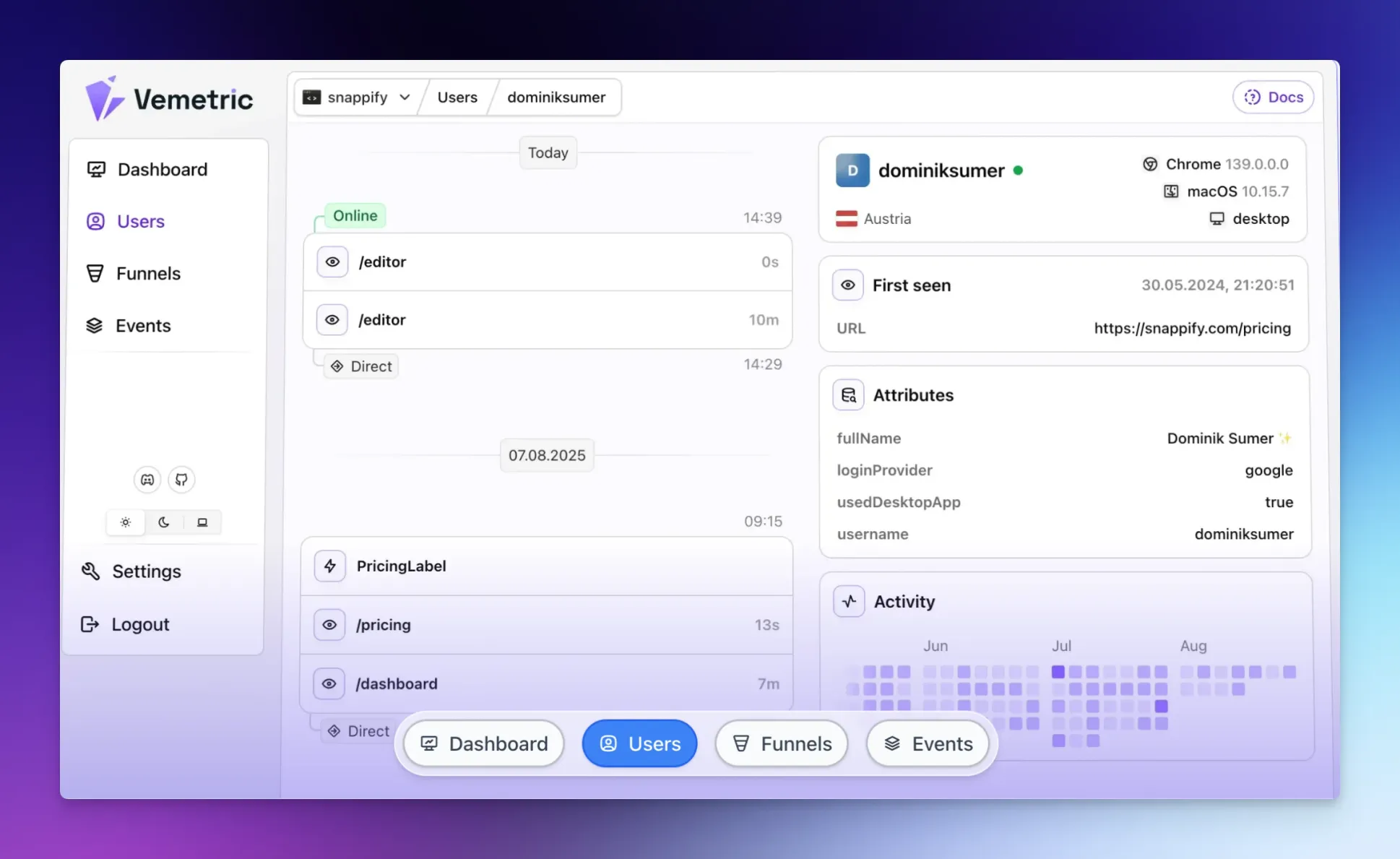
Vemetric is an open-source analytics platform that lets you see exactly where your visitors come from and what they do.
You can see key traffic source details, such as top referrers and visitor origins, alongside user journeys, website engagement metrics, and custom events.
Once Vemetric is installed on your website, it automatically starts recording page views and event data. This captures visits from all channels, like search, referrals, or direct.
The dashboard displays real-time data, including session duration, bounce rate, top pages, and more.
To analyze a specific source, click on any referrer or UTM tag in the list and filter the dashboard by:
- Referrer domains
- UTM source values
- Mediums like email, ads, or organic
For deeper analysis, you can connect traffic sources to user behavior and product analytics to see how visitors from different sources behave.
Good for: SaaS products and apps needing privacy-first analytics and cookieless tracking.
Google Analytics 4
GA4 is the industry-standard Google Analytics tool that tracks all traffic sources for your website.
Its event-based tracking model offers more accurate source attribution and user journeys across devices and sessions.
You can see which channels drive visits, conversions, and revenue, and filter by source, medium, campaign, or UTM tags you set up in your links.
Its main strength is its powerful ecosystem: you can integrate it with Google Ads, Google Search Console, and BigQuery data export for deeper marketing analysis and reporting.
However, its interface can be confusing for beginners and requires technical expertise to implement properly.
Good for: Marketers and product teams of all sizes, as it’s free at standard levels and offers conversion tracking, channel attribution, and multi-device tracking, with strong reporting capabilities.
Matomo
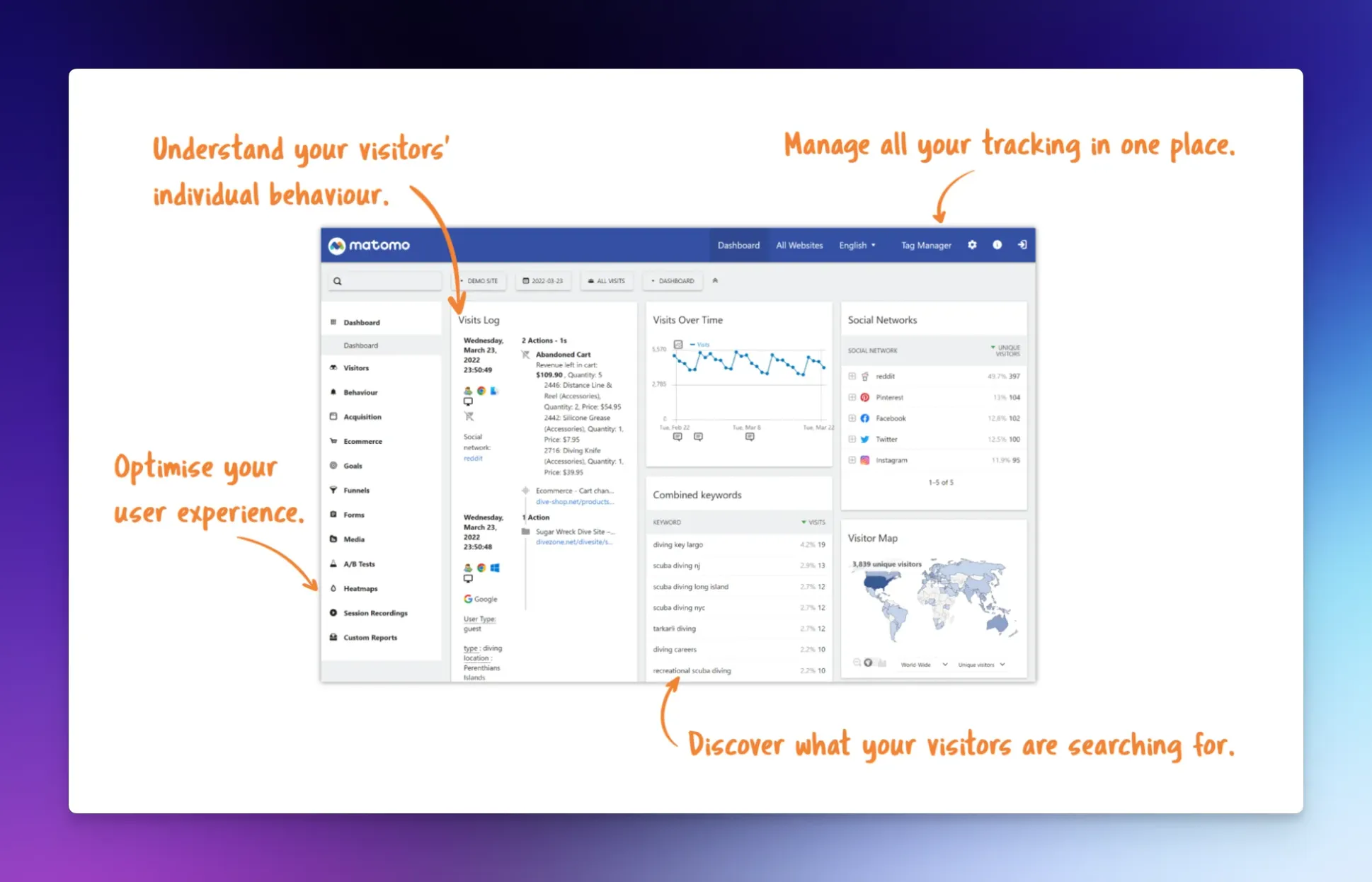
Matomo is also an open-source web analytics platform that lets you track sessions, goals, events, and more.
It offers powerful traffic source analysis, campaign tracking, and a key advantage over Google Analytics: 100% data ownership with no sampling. You can host it on your own servers for full control over your data without relying on third parties.
The only downside is that its interface can feel less modern than newer alternatives, and it can be more complex to set up than hosted SaaS tools.
Good for: Privacy-conscious businesses and any organization that must keep data on-premises.
SEMrush Traffic Analytics
SEMrush Traffic Analytics is part of the broader SEMrush SEO suite. It provides traffic estimates for any domain and breaks down their sources by:
- Organic vs. paid
- AI traffic
- Social networks
- Referral sites
It does not replace first-party analytics for your own website’s source tracking. However, it is still extremely useful for strategic insight into market behavior and trends, especially if you want to reverse-engineer a competitor’s successful keywords and top-performing pages to optimize your own content strategy.
Good for: SEO specialists and content marketers who want to see where competitor’s traffic comes from, including organic and paid channels.
Final Words
Tracking your website traffic sources is not about collecting more data. It is about collecting the right data and knowing what to do with it.
You do not need a dozen complicated tools or a team of analysts to do this well.
Analytics tools like Vemetric give you a straightforward way to track your website traffic sources, connect them to real user behavior, and understand exactly which channels you should pay attention to.
With this information, you can allocate resources wisely and improve conversions rather than guess what’s working.
FAQs
You should track pages per session, unique visitors, bounce rate, average session duration, and conversion rate by source.
It depends on your site and goals. Weekly reviews work for smaller sites, while larger sites or active campaigns benefit from daily checks to catch trends or issues early.